Best Emotional Support Animals for Vermont Apartments — A Clinician-Vetted Lineup
Finding the right emotional support animal for a Vermont apartment is rarely as simple as picking your favorite animal. The species, temperament, noise profile, and space requirements of a potential ESA all intersect with Vermont's rental landscape — think historic Burlington triple-deckers, Montpelier studio apartments, and rural Lamoille County duplexes where landlords may have never fielded an ESA accommodation request before. Choosing wisely from the start can mean the difference between a smooth housing conversation and an unnecessary dispute.
This clinician-vetted lineup draws on the practical experience of licensed mental health professionals (LMHPs) who routinely evaluate clients in Vermont for emotional support animal accommodations. Under the federal Fair Housing Act (FHA) and HUD's guidance document FHEO-2020-01 — Assessing a Person's Request to Have an Animal as a Reasonable Accommodation Under the Fair Housing Act — a tenant with a documented disability-related need may request a reasonable accommodation allowing an ESA in otherwise pet-restricted housing. The accommodation is tied to you and your clinician's assessment, not to any species-specific rule. What follows, therefore, is not a prescriptive list of "approved" animals but rather a thoughtful, evidence-informed guide to the animals that Vermont-based clinicians most frequently find practical, therapeutically sound, and apartment-compatible.
Important disclaimer: This article is informational only and does not constitute medical, mental-health, or legal advice. Only a Vermont-licensed mental health professional can determine whether an ESA is therapeutically appropriate for your individual situation. For housing disputes, please consult a Vermont-licensed attorney or contact Vermont Legal Aid. For questions about your specific FHA rights, review our Vermont ESA housing letter and FHA guide.
How This List Was Assembled
Each animal below was evaluated against four criteria that Vermont clinicians and housing advocates consistently flag as critical: (1) therapeutic utility — research or strong clinical consensus that the species can provide genuine emotional support; (2) apartment suitability — realistic space and noise considerations for typical Vermont rental units; (3) landlord-readiness — how straightforward it is to communicate the accommodation request to a Vermont landlord under FHA guidelines; and (4) care sustainability — whether the animal's maintenance demands are realistic for someone managing a mental health condition.
No animal on this list is "automatically" an ESA. A licensed mental health professional licensed in Vermont must evaluate your specific disability-related need and determine whether an ESA — and which ESA — is therapeutically appropriate for you. The animals below represent the species that most often clear all four criteria when that individualized assessment takes place.
1. Dogs — The Anchor Animal for Emotional Support
Why Vermont Clinicians So Often Recommend Them
Dogs have the deepest body of peer-reviewed evidence behind their role in reducing symptoms of anxiety, depression, PTSD, and loneliness — conditions that a Vermont LMHP will assess when determining whether an ESA is therapeutically indicated. The human-canine bond activates oxytocin release in both species, and the routine a dog imposes — morning walks along the Winooski River, structured feeding times, regular outdoor exposure — can be profoundly stabilizing for people managing mood disorders or chronic stress. Vermont's trail networks and green spaces make dog ownership genuinely enriching rather than burdensome, even for apartment dwellers.
For Vermont apartments specifically, breed and temperament selection matters more than size alone. Many Vermont landlords operate under blanket "no pets" policies that the FHA overrides for documented ESAs, but a thoughtful choice of dog can make the accommodation conversation significantly easier. Lower-energy breeds that adapt well to smaller spaces — Cavalier King Charles Spaniels, Basset Hounds, French Bulldogs, and many mixed-breed adults — tend to generate fewer neighbor complaints than high-drive working breeds in confined settings. That said, your clinician's letter documents your need, not a breed certification; the FHA does not permit landlords to impose breed restrictions on ESAs in most circumstances, though local breed-specific legislation (BSL) at the municipal level can complicate matters in certain Vermont towns.
One practical consideration unique to Vermont rental housing: older properties may have narrow staircases and low-clearance basements. A very large dog in a fourth-floor walk-up without an elevator is a welfare question as much as a housing one. Vermont clinicians frequently encourage clients to think honestly about whether the animal they are considering can thrive in their specific unit — because a flourishing ESA relationship depends on the animal's wellbeing, not just the human's. For a deep dive into the best dog breeds for Vermont apartment living, see our companion guide on ESA dogs and Vermont apartment-friendly breeds.
Practical takeaway: Dogs are the gold-standard ESA species for documented emotional support efficacy, but invest time in selecting a temperament and energy level that genuinely fits your unit size and lifestyle. A Vermont-licensed clinician can help you think through whether a dog is the right therapeutic fit for your situation.
2. Cats — Vermont's Quiet, Low-Profile Companion
Unassuming, Independent, and Deeply Therapeutic
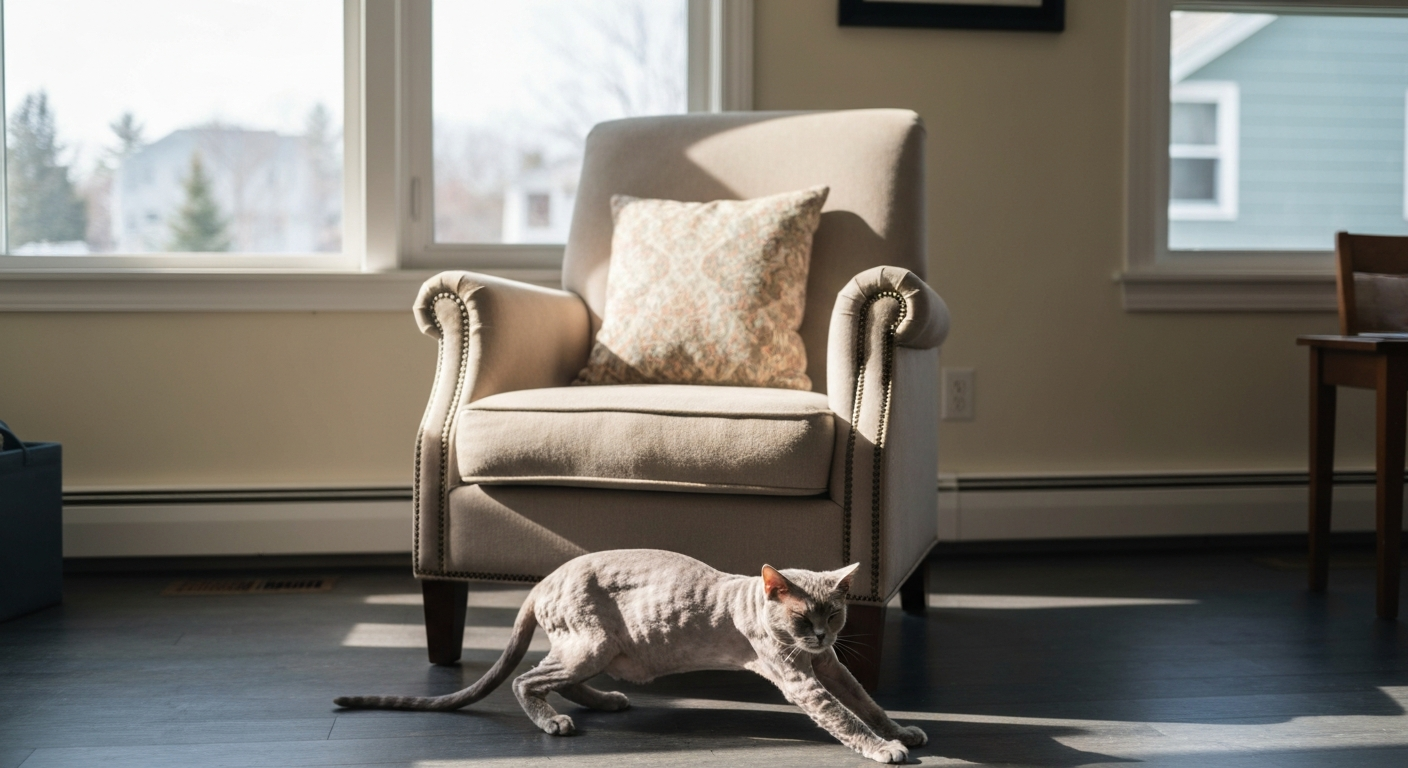
Cats are, statistically, the most common ESA species processed through licensed Vermont mental health practices — and for good reason. They are virtually silent compared to dogs, require no outdoor walks, and produce a measurably calming effect through purring frequencies (25–50 Hz) that some researchers associate with reduced cortisol levels and even bone density preservation. For Vermont residents managing social anxiety, agoraphobia, or conditions where leaving the apartment is itself a daily challenge, a cat offers consistent, reliable companionship without requiring the handler to navigate outdoor social environments.
Vermont's rental market skews toward older housing stock with thicker plaster walls and solid-wood floors — an acoustic environment that actually benefits cat owners, since the main neighbor-facing noise (litter box odors aside) is minimal. Cats also adapt readily to studio and one-bedroom layouts. Breeds like the Maine Coon — which has deep regional affinity in New England — the Ragdoll, and the British Shorthair tend to be calm, affectionate, and undemanding in ways that align well with the therapeutic goals a Vermont clinician might identify. That said, a standard domestic shorthair or a shelter rescue can be equally effective; temperament and your personal bond matter far more than pedigree.
Under FHEO-2020-01, a landlord cannot charge a pet deposit for a documented ESA, nor can they reject the accommodation solely because their lease says "no cats." They may, however, hold the tenant responsible for any damage caused — a standard provision that applies equally to all tenants. Vermont Legal Aid has handled ESA housing disputes and is a useful resource if you encounter resistance. For a full breakdown of the cat-specific ESA experience in Vermont, visit our article on ESA cats as Vermont's quiet apartment companions.
Practical takeaway: Cats are an excellent first ESA choice for Vermont apartment dwellers who value low-maintenance companionship and minimal neighbor-impact. A Vermont-licensed clinician can assess whether a feline companion aligns with your therapeutic goals.
3. Rabbits — A Surprisingly Effective Small-Space ESA
Gentle, Quiet, and Clinically Underrated
Rabbits occupy a compelling middle ground that Vermont clinicians are increasingly recognizing: they are social animals capable of genuine bonding with their owners, yet they are quiet enough to be virtually invisible to neighbors and compact enough for the smallest studio apartment. Research on animal-assisted therapy has documented rabbits' effectiveness in reducing anxiety and agitation across a range of populations, and their soft-textured fur and rhythmic breathing when held can provide grounding sensory input that is particularly useful for people managing PTSD, panic disorder, or sensory processing differences.
From a Vermont landlord-relations standpoint, rabbits are arguably the easiest ESA to introduce into a rental conversation. They produce no vocalizations that penetrate walls, require no outdoor access, and leave no odor trail in common areas (provided the owner maintains their enclosure responsibly). A rabbit is also notably less likely to trigger the reflexive landlord concern about property damage than a dog or even a cat. The primary care considerations — hay-based diet, sufficient enclosure space, daily free-roaming time, and annual veterinary check-ups — are manageable for most Vermont renters.
One nuance worth noting: rabbits are prey animals with acute stress responses, and a household with loud noises, frequent visitors, or other pets can be genuinely distressing for a rabbit. This is not a disqualifying factor, but it is something a Vermont clinician will likely explore when assessing whether a rabbit is a therapeutically sound choice for your specific living situation. Rabbits thrive on predictable, calm routines — which can, in itself, be a therapeutic structure for their owners. Learn more about rabbit-specific ESA considerations in Vermont in our dedicated piece on rabbits as emotional support animals in Vermont.
Practical takeaway: Rabbits are an underutilized but genuinely effective ESA option for Vermont apartment residents, particularly those in smaller units or noise-sensitive buildings. Consult a Vermont-licensed clinician to determine whether a rabbit's care profile aligns with your therapeutic and lifestyle needs.
4. Guinea Pigs — Social, Manageable, and Surprisingly Comforting
Community Animals With a Therapeutic Presence
Guinea pigs — cavies, to those who keep them — are small, sociable, and remarkably effective as presence-based emotional support animals. Unlike hamsters or gerbils, which are primarily nocturnal, guinea pigs are active during daylight hours and engage with their owners through recognizable vocalizations, eye contact, and responsive behavior. Animal-assisted therapy programs have used guinea pigs with pediatric and adult populations alike, and Vermont clinicians working with clients who have social isolation, depression, or anxiety disorders may find that a guinea pig's gentle interactivity provides meaningful daily connection without the demands of a larger animal.
For Vermont apartment living, guinea pigs score extremely well on the practical criteria. They require modest floor space (a properly sized cage or enclosure, typically 7.5+ square feet for a pair), produce soft vocalizations — the characteristic "wheek" is audible but unlikely to disturb a neighbor through a standard Vermont apartment wall — and are straightforward to care for on a consistent daily schedule. They are also social animals who do best in pairs, which means the enrichment they provide to each other reduces the owner's responsibility to be their sole source of stimulation. This is a meaningful consideration for Vermont residents whose mental health condition sometimes makes sustained daily interaction difficult.
Guinea pigs do require fresh vegetables daily, access to vitamin C (which they cannot synthesize independently), and annual veterinary attention — ideally from an exotics-experienced vet, of which Vermont has several, particularly in the Burlington and Brattleboro areas. The commitment is real but very manageable, and the sense of purposeful caretaking that guinea pigs inspire is, in itself, therapeutically valuable. A Vermont LMHP will weigh these factors when assessing whether this species is the right fit for your individual situation.
Practical takeaway: Guinea pigs are a strong choice for Vermont renters seeking consistent, engaging companionship in a small-footprint animal. Their sociable nature and manageable care profile make them a legitimate therapeutic option worth discussing with a Vermont-licensed clinician.
5. Birds (Specifically Parakeets and Cockatiels) — Cheerful Companions for the Right Owner
Sound, Stimulation, and the Right Therapeutic Context
Birds are not for every Vermont apartment, and a responsible clinician will say so directly. However, for the right individual — particularly someone whose therapeutic goals center on engagement, cognitive stimulation, and the development of daily routine — a parakeet (budgerigar) or cockatiel can be a genuinely meaningful ESA. Both species are capable of significant bonding with their primary caregiver, recognize individual humans, and respond to voice and attention in ways that many owners describe as profoundly companionable. For Vermont residents experiencing depression-related withdrawal or isolation, a bird's daily interaction demands can serve as a gentle but consistent behavioral activation prompt.
The apartment-compatibility calculus for birds requires honesty. Cockatiels can produce vocalizations in the 65–70 decibel range — audible through thin walls in many Vermont rental buildings. Parakeets are quieter but still chatty. Owners in buildings with close-proximity neighbors or noise-sensitive lease provisions should discuss this honestly with their landlord during the accommodation process. Under FHEO-2020-01, the landlord must engage in an interactive accommodation process and cannot reflexively deny the request, but a good-faith conversation about noise mitigation — such as covering the cage at night to reduce early-morning calls — is both legally permissible and relationship-preserving.
Birds also require specialized veterinary care from avian-certified practitioners. Vermont has a limited number of avian vets, though several practices in Chittenden and Windham counties have avian experience. The lifespan of a cockatiel (15–25 years) is also worth serious consideration — this is not a short-term commitment. A Vermont-licensed clinician evaluating a bird as a potential ESA will likely explore whether the long-term care demands are realistic given the client's health, housing trajectory, and support network.
Practical takeaway: Parakeets and cockatiels can be effective ESAs for the right Vermont renter, but they require an honest assessment of noise tolerance, veterinary access, and long-term commitment. A Vermont LMHP can help you determine whether this species aligns with your therapeutic profile.
6. Miniature or Dwarf Hamsters — Nighttime Comfort for Shift Workers and Night Owls
A Niche Match for the Right Vermont Renter
Hamsters occupy a more specialized therapeutic niche than the other animals on this list, and a Vermont clinician will be the first to note that their nocturnal activity pattern is both their key limitation and, for certain clients, their greatest asset. Standard Syrian hamsters and dwarf varieties (Roborovski, Campbell's, Winter White) are quiet, compact, and odor-manageable when properly housed. For a Vermont renter who works evening or overnight shifts — common in Burlington's hospitality sector or in Vermont's healthcare and public safety workforce — a hamster's peak activity hours align naturally with the owner's awake time, creating opportunities for meaningful interaction that a daytime-active animal simply cannot provide at 2 a.m.
Therapeutically, the tactile engagement of handling a hamster and observing its behavior has documented calming effects in controlled research settings, particularly for anxiety and stress reduction. The routine of nightly cage cleaning, feeding, and interaction can also provide structure for individuals whose mental health condition disrupts daily rhythms. Vermont clinicians working with clients in irregular-schedule occupations or those experiencing circadian disruption may find hamsters to be an underappreciated fit.
From a Vermont apartment standpoint, hamsters are among the most neighbor-neutral ESAs possible. The wheel noise from an inadequate wheel (cheap plastic wheels are notoriously loud) is solvable with a silent-spinner model — an investment of roughly $25 that eliminates the most common hamster-related housing complaint. Hamsters are also short-lived (2–3 years), which means the commitment is more contained than other species, though this reality can itself be emotionally significant for someone with grief sensitivity or attachment-related concerns — something a Vermont LMHP will thoughtfully explore.
Practical takeaway: Hamsters are a niche but legitimate ESA option for Vermont renters with non-traditional schedules or small living spaces. Their quiet footprint and manageable care make them apartment-friendly; a Vermont clinician can assess whether their nocturnal nature is a therapeutic asset or a mismatch for your needs.
7. Fish (Aquarium Species) — The Overlooked Calm-Induction ESA
Visual Therapy in a Tank
It may surprise some readers to find fish on a clinician-vetted ESA list, but the evidence for aquarium observation as an anxiety and stress-reduction tool is more robust than popular culture acknowledges. Multiple peer-reviewed studies — including research conducted by the National Marine Aquarium in collaboration with Plymouth University — have documented measurable reductions in heart rate and blood pressure associated with watching fish in a well-maintained aquarium. For Vermont renters managing generalized anxiety disorder, high-stress occupations, or hyperarousal symptoms associated with PTSD, an aquarium may provide passive but genuine therapeutic benefit simply by being present in the living space.
Fish are, objectively, the most apartment-compatible ESA species available. They produce no noise, no odor when properly maintained, create no property damage concerns, and require no landlord-facing behavioral accommodation beyond allowing the tank itself. A Vermont landlord may raise questions about water damage liability — a legitimate concern that a tenant can address proactively by discussing renter's insurance coverage. Under FHEO-2020-01, the landlord must consider the accommodation request in good faith, though they may request documentation of your disability-related need from a Vermont-licensed LMHP, just as they would for any ESA species.
The therapeutic relationship with fish is fundamentally different from the bonding available with mammals — there is no reciprocal social interaction, no physical comfort, and no behavioral engagement. This means fish ESAs are most appropriate when the therapeutic goal is specifically sensory calming, anxiety reduction, or environmental mood enhancement, rather than companionship or attachment. A Vermont clinician will assess whether this type of passive therapeutic benefit is what your treatment plan actually requires, or whether a more interactive species would better serve your documented needs.
Practical takeaway: Fish are a legitimate, ultra-low-impact ESA option for Vermont renters whose therapeutic needs center on calm-induction and sensory grounding. A Vermont-licensed LMHP can determine whether the passive nature of fish ownership meets the threshold of disability-related support in your individual assessment.
Getting Your Vermont ESA Letter: What to Expect
Regardless of which animal resonates with your situation, the pathway to a legally recognized ESA accommodation in Vermont housing follows the same evidence-based, clinician-led process. Here is what that process looks like through a legitimate Vermont-licensed provider:
- Intake assessment: A licensed mental health professional — an LCSW, LMHC, LMFT, psychologist, or psychiatrist licensed in Vermont — conducts a thorough clinical evaluation of your mental health history, current symptoms, and the ways in which an emotional support animal may alleviate one or more symptoms of your condition.
- Clinical determination: The LMHP independently determines whether an ESA is therapeutically appropriate for your situation. This is not automatic. Each evaluation is individualized.
- Letter issuance: If the clinician determines an ESA is warranted, they issue a signed letter on their professional letterhead, including their license type, license number, state of licensure, and contact information. This is the document your Vermont landlord is entitled to review.
- Housing accommodation request: You submit the ESA letter to your landlord as part of a formal reasonable accommodation request. The landlord must respond in a reasonable timeframe and may not impose a pet fee or deposit.
Be cautious of any online service that offers "instant" or "guaranteed" ESA letters, sells "ESA registration certificates," or does not involve a licensed clinician in an actual assessment. HUD has explicitly stated that documents from online registries are not sufficient to establish an ESA accommodation request. Vermont landlords who are well-informed — and many are — will recognize the difference between a legitimate LMHP letter and a purchased certificate.
For more on the FHA process specific to Vermont renters, including what your landlord can and cannot ask, visit our comprehensive guide to Vermont ESA housing letters and FHA protections. If your clinician has already recommended an ESA and you would like foundational guidance on working with your animal effectively, our article on ESA training basics in Vermont offers practical, Vermont-specific guidance.
A Note on ESA Species and Vermont Law
Vermont does not currently impose additional state-level restrictions on ESA species or clinician relationship duration beyond the federal FHA framework — unlike states such as California, Montana, or Louisiana, which have enacted specific legislation requiring established therapeutic relationships of 30 days or more before an ESA letter may be issued. Vermont renters therefore operate primarily within the federal FHA framework as interpreted by HUD's FHEO-2020-01 guidance. That said, Vermont's Consumer Protection Act (9 V.S.A. § 2451 et seq.) provides an additional layer of protection against unfair or deceptive practices — which could be relevant if a tenant believes a landlord is acting in bad faith in denying an accommodation request.
If you encounter resistance from a Vermont landlord after submitting a properly documented ESA accommodation request, Vermont Legal Aid (800-889-2047) is a free resource and has experience with FHA housing accommodation cases. For more complex disputes, consult a Vermont-licensed attorney. This article is not a substitute for legal counsel.
Summary: Finding Your Best Vermont Apartment ESA
| Animal | Noise Profile | Space Need | Therapeutic Strength | Landlord Ease |
|---|---|---|---|---|
| Dog | Moderate–High | Moderate–High | Very High | Moderate |
| Cat | Low | Low–Moderate | Very High | High |
| Rabbit | Very Low | Low–Moderate | High | Very High |
| Guinea Pig | Low | Low | High | Very High |
| Bird (Parakeet/Cockatiel) | Moderate | Low | Moderate–High | Moderate |
| Hamster | Very Low | Very Low | Moderate | Very High |
| Fish | Silent | Variable | Moderate (calming) | Very High |
The best ESA for your Vermont apartment is ultimately the one that a Vermont-licensed mental health professional determines is therapeutically appropriate for your documented needs — paired with a species that can genuinely thrive in your living situation. This list is a starting point for that conversation, not a substitute for the individualized clinical evaluation that every legitimate ESA process requires.
Ready to begin? Connect with a Vermont-licensed clinician through our evaluation process to explore whether an emotional support animal is therapeutically appropriate for your situation. Every assessment is conducted by a licensed professional, individualized to your mental health history, and fully compliant with Vermont and federal standards.
Disclaimer: This article is provided for informational purposes only and does not constitute medical, mental-health, or legal advice. The information presented does not create a clinician-client relationship. Only a Vermont-licensed mental health professional can evaluate whether an emotional support animal is therapeutically appropriate for your individual circumstances. For housing disputes, please consult a Vermont-licensed attorney or contact Vermont Legal Aid. Federal ESA housing protections are governed by the Fair Housing Act and HUD's FHEO-2020-01 guidance; ESAs no longer qualify for air-travel accommodations under the Air Carrier Access Act following the Department of Transportation's January 2021 rule change.
Ready to start your Vermont ESA letter?
Licensed Vermont clinician review. Compliant with state law.
Get My Vermont ESA Letter